RFID Beyond Identification: Building the Neural Layer of Smart Systems
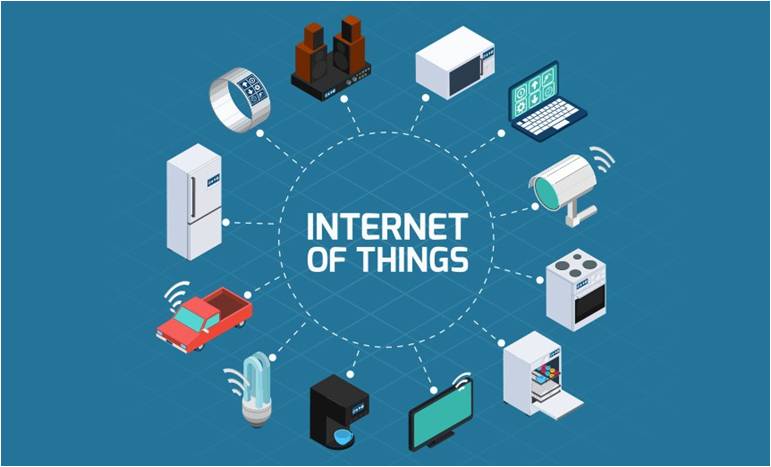
In the context of continuous digitalization and the evolution of the Internet of Things, the boundary between the physical world and the digital world is gradually blurring. In the past, humans relied on manual records and limited sensing methods to understand reality. Today, however, a data-driven “perception network” is taking shape. Within this network, RFID (Radio Frequency Identification) technology is no longer just a simple tagging tool—it is evolving into a critical node that connects the physical world with digital systems, functioning much like a “neural endpoint” that provides foundational sensing capabilities.
In its early stages, RFID technology primarily addressed the problem of identification. By attaching electronic tags to objects and using readers for wireless communication, systems could quickly obtain identity information. This significantly improved efficiency, especially in logistics, warehousing, and retail, marking a shift from manual scanning to automated identification. At the hardware level, the integration of components such as the UHF RFID module has further standardized and miniaturized deployment, making large-scale adoption more practical. However, at this stage, RFID essentially remained a passive recording tool—it could answer “what is this,” but not “what condition is it in right now.”
As application demands have grown, RFID has begun integrating with sensor technologies, gradually acquiring the ability to perceive environmental and status-related data. For instance, in cold chain logistics, RFID tags can incorporate temperature monitoring to record environmental changes in real time. In industrial manufacturing, RFID can be combined with equipment data to monitor operational status and production progress. Meanwhile, advances in infrastructure—such as the adoption of the long range RFID reader module—enable wider coverage and more flexible deployment across complex environments. This evolution signifies that RFID is no longer just a gateway for data input but has become an active participant in data generation—transforming from an identification tool into a sensing node.
When RFID nodes are deployed at scale across physical spaces, a structure resembling a neural network begins to emerge. Each tag acts as a point of data collection, each reader as a channel for data transmission, and backend systems are responsible for integration and analysis. This architecture closely mirrors biological nervous systems: widely distributed, responsive in real time, and highly coordinated. In such a system, RFID is no longer an isolated device but a fundamental unit embedded within a broader intelligent network, enabling continuous perception of the physical world.
At the application level, this “neuralized” RFID system is already being implemented across multiple industries. In smart logistics, RFID gives every item a traceable digital identity, recording every stage from production to delivery and forming a complete data chain. A typical example is RFID warehouse management, where real-time inventory visibility and automated tracking significantly improve operational efficiency and accuracy. In intelligent manufacturing, RFID establishes unified identification for equipment and materials, enabling visualization and automated scheduling of production processes. In urban management, RFID is used for vehicle identification and public asset management, gradually building a city-wide perception network. In healthcare and biological fields, RFID even extends to human-centered applications, such as patient tracking and pharmaceutical traceability, advancing integrated perception across people, objects, and environments.
The true leap of RFID from a sensing tool to an intelligent node lies in its integration with artificial intelligence. Once RFID-generated data enters AI systems, it is no longer just static information but becomes the foundation for analysis, prediction, and decision-making. For example, logistics data can be modeled to optimize inventory and routing; equipment data can be analyzed to predict failures in advance; consumer behavior data can enable more precise services. This transition from “perception” to “cognition” positions RFID as a vital component within intelligent systems.
Nevertheless, as RFID moves toward becoming a “neural node,” several challenges remain. On one hand, the lack of unified data standards across systems limits interoperability and data integration. On the other hand, complex environments—such as those involving metal or liquids—still pose interference challenges for radio signals. Additionally, as data collection scales up, issues of information security and privacy protection become increasingly critical. Striking a balance between efficient sensing and secure data handling will be a key concern for the future.
Looking ahead, RFID technology will continue to evolve toward higher integration and greater intelligence. Tags will no longer be mere carriers of information but will integrate sensing, computing, and communication capabilities into compact nodes. Reader systems will become more intelligent, capable of processing and responding to data at the edge. The overall network will become more energy-efficient and scalable, supporting large-scale deployment. At the same time, with the advancement of digital twin technologies, RFID-generated data will serve as a crucial foundation for real-time mapping between physical and virtual worlds.
Fundamentally, the evolution of RFID represents an upgrade in how we perceive the world. From simple physical tags to intelligent neural nodes, it is not just the technology that has changed, but also the way humans understand and manage reality. When everything can be identified, sensed, and analyzed, the world will no longer be static—it will become a dynamic, continuously interacting system. And RFID stands at the core of this transformation, acting as one of the most fundamental yet indispensable connectors in the intelligent ecosystem.
Авторские права © 2026 Shenzhen Jietong Technology Co.,Ltd. все права защищены.

сеть ipv6 поддерживается

 русский


