Securing the Quantum Future: RFID-Driven Asset Management for Quantum Computing Infrastructure
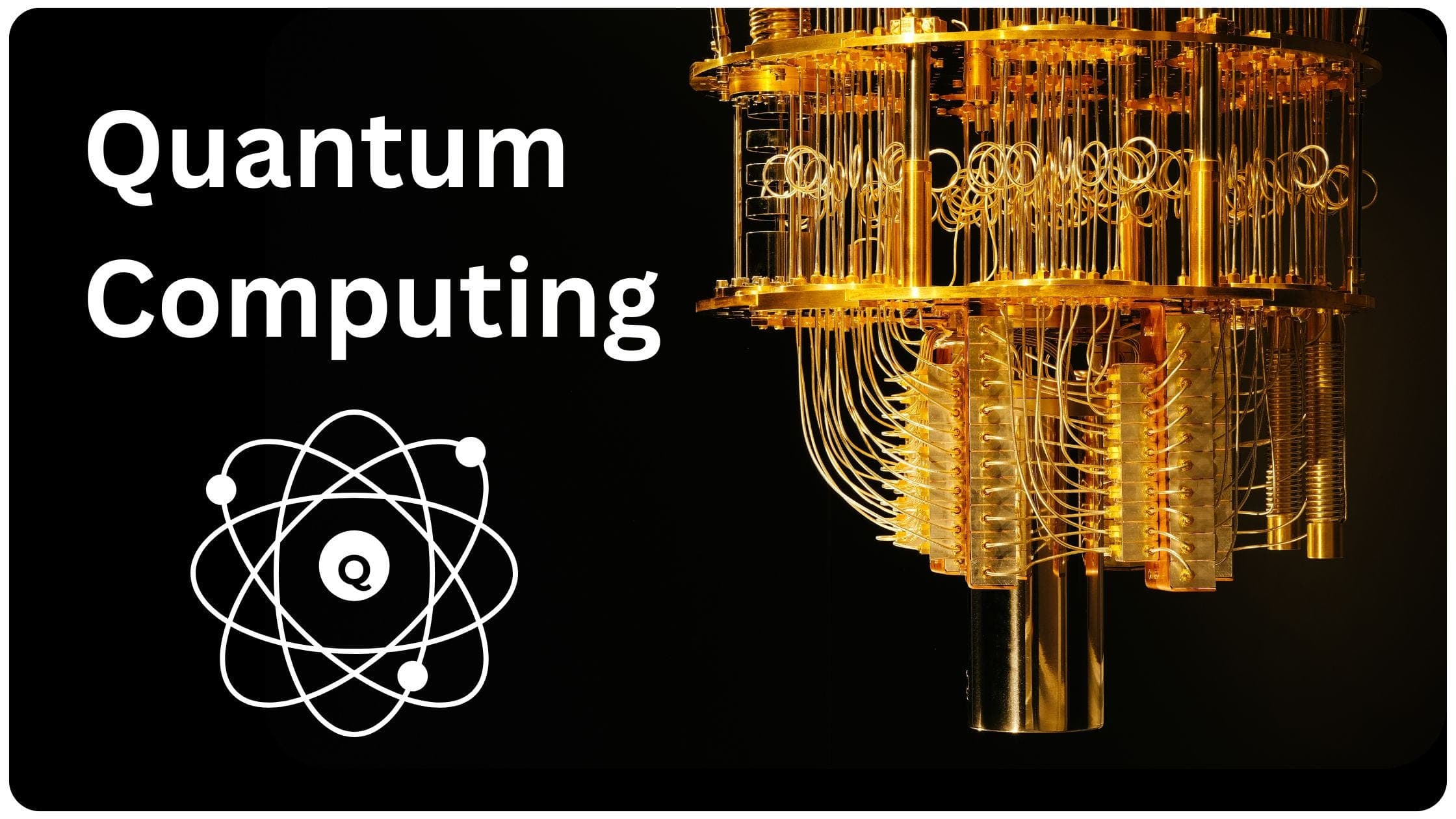
As quantum computing moves from laboratories to industrial deployment, humanity is entering a new era driven by quantum technologies. Quantum computers, quantum communication equipment, superconducting chips, cryogenic refrigeration systems, and precision measurement instruments are becoming critical assets for research institutes, semiconductor fabs, and national laboratories.
These assets are extremely valuable, highly complex, and extremely sensitive to environmental conditions. A single operational mistake or an uncontrolled transfer can result in enormous financial losses and technological risks. In the quantum era, asset management is no longer just about “keeping track of equipment”; it has become a strategic system closely linked to research security, technological sovereignty, and industrial competitiveness.
RFID (Radio Frequency Identification) technology is emerging as the invisible “nervous system” of quantum asset management, providing a foundational guarantee for the security and traceability of quantum devices.
Compared with traditional IT or industrial equipment, quantum systems present unprecedented management challenges.
Superconducting quantum computers must operate at millikelvin temperatures, ion-trap systems rely on ultra-high-vacuum environments, and quantum communication equipment is highly sensitive to optical links and calibration status. Any unauthorized movement, improper storage, or missing maintenance record can degrade performance or even cripple an entire system.
Traditional manual ledgers, barcodes, and fragmented management systems cannot meet the requirements for real-time visibility, accuracy, and traceability. This is why RFID naturally fits the quantum asset management scenario, especially when combined with industrial-grade uhf rfid modules and long range rfid reader modules that enable automatic identification across laboratories and data centers.
In full lifecycle management, RFID acts as a digital identity for every quantum asset.
From manufacturing, warehousing, deployment, and commissioning to maintenance and retirement, each quantum device and critical component can be bound to a unique RFID tag.
Using UHF RFID tags together with a directional rfid reader, assets can be identified automatically without physical contact or unpacking, while their location, status, and history are continuously recorded.
This enables laboratory managers to build a real-time asset map, monitor utilization and maintenance cycles, and clearly define responsibility — transforming asset management from experience-based operations to data-driven management.
Security is the central concern in quantum asset management.
Quantum devices are often part of national-level research projects and contain core technologies. Loss, substitution, or unauthorized access can create risks far beyond ordinary assets.
By integrating RFID with access control, video surveillance, and permission systems, laboratories can build a unified physical-digital security system.
When a device leaves an authorized area, RFID readers trigger instant alarms.
When unauthorized personnel attempt to access critical components, the system automatically logs the event and activates security policies.
With RFID as the sensing layer, quantum asset protection shifts from passive defense to proactive security.
Traceability is a key capability for the industrialization of quantum technology.
The performance of quantum devices depends heavily on manufacturing processes and assembly details. The batch, materials, and test results of a single superconducting chip can affect the performance of the entire system.
By deploying RFID tags on chip trays, cryogenic components, and optical modules, organizations can build a complete digital history for each quantum device.
When performance issues occur, engineers can quickly trace back to specific batches, process steps, and maintenance actions, enabling precise troubleshooting and closed-loop quality control.
This traceable asset chain is a foundational infrastructure for scaling and standardizing the quantum industry.
Quantum projects often involve universities, research institutes, equipment manufacturers, and data centers working together. Assets frequently move between organizations.
A unified RFID asset identification system enables trusted data sharing while meeting compliance and security requirements.
All parties can see where equipment is, how it is used, and who is responsible — eliminating information silos and blind spots, and building a verifiable and auditable collaboration mechanism.
From a broader perspective, RFID is not just a management tool — it is part of the infrastructure of the quantum industry.
Just as the electric age required smart grids and the internet age required cloud platforms, the quantum era needs a trusted, traceable asset management foundation.
RFID creates a digital mirror of the physical world, turning every quantum device into a manageable, observable, and analyzable intelligent node.
Quantum technology is seen as the core engine of the next technological revolution, and asset management is the lubrication system that keeps this engine running smoothly.
With RFID-based security and traceability, quantum devices are no longer “black-box assets” — they become intelligent entities with a complete digital lifecycle.
In the quantum era, whoever controls the asset management foundation will control the pace of industrialization and technological deployment.
категории
новый блог
Авторские права © 2026 Shenzhen Jietong Technology Co.,Ltd. все права защищены.

сеть ipv6 поддерживается

 русский


