Securing Hydrogen Infrastructure Through RFID-Based Lifecycle Management
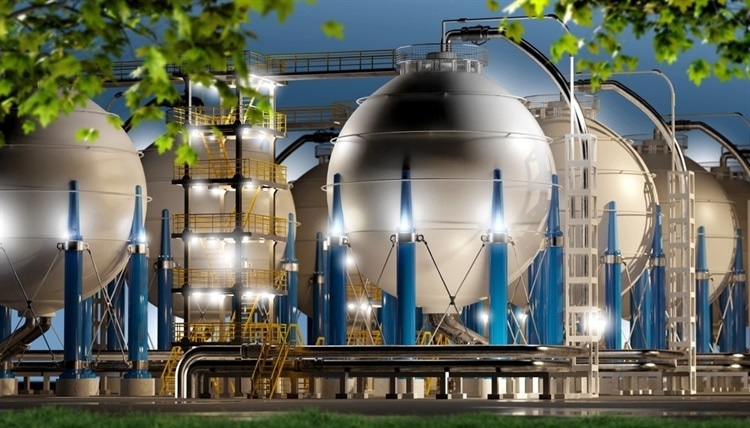
Against the backdrop of carbon neutrality goals and global energy transition, hydrogen energy is gradually moving from concept to large-scale application, emerging as a key carrier connecting renewable energy production with end-use consumption. As hydrogen infrastructure rapidly expands across hydrogen production, storage, transportation, and refueling, the physical foundation of the hydrogen industry continues to grow. At the same time, the inherent characteristics of hydrogen—high flammability, strong diffusivity, and high-pressure storage requirements—pose stringent challenges to equipment safety, reliability, and regulatory compliance. Any lapse in equipment management can lead to serious operational disruptions or safety incidents, making intelligent and traceable equipment management a critical prerequisite for the sustainable development of the hydrogen industry.
In practical deployment, hydrogen infrastructure consists of a wide variety of high-value and highly specialized assets, including electrolyzers, compressors, high-pressure hydrogen cylinders, liquid hydrogen storage tanks, transport pipelines, and hydrogen dispensers. These assets typically operate under harsh conditions, have long service lifespans, and are subject to strict safety and regulatory requirements. Traditional management approaches—relying on manual records, paper-based labels, or fragmented information systems—are increasingly inadequate. They often result in unclear equipment identities, incomplete maintenance histories, and information silos across regions and organizations. When incidents occur, responsibility tracing and root-cause analysis become difficult, revealing a fundamental issue: the absence of a unified and reliable digital identity for hydrogen equipment.
RFID technology offers a low-intrusion and highly reliable solution to this challenge by enabling unique identification of physical assets. By deploying industrial-grade, heat-resistant, and metal-compatible RFID tags in combination with uhf rfid antenna systems across hydrogen production, storage, and refueling facilities, each asset can be assigned a unique and tamper-resistant digital identity. This identity is bound to essential information such as manufacturer details, technical specifications, and production data, and continuously accumulates operational, inspection, and maintenance records throughout the equipment’s service life. As a result, hydrogen assets are transformed from static physical objects into dynamically manageable digital entities.
During the manufacturing and factory acceptance stage, RFID can be used to bind critical quality data, including raw material batches, welding processes, and pressure test results. These records remain associated with the equipment throughout its lifecycle. If quality issues arise later, manufacturers and operators can quickly trace them back to specific production stages, supporting accurate fault analysis and accountability. During installation and commissioning, RFID systems enable automatic verification of equipment models, design parameters, and certification status, preventing incorrect installation or unauthorized equipment from entering operation and reducing risks at the earliest stage.
Throughout daily operation, RFID plays a central role in maintenance management and safety assurance. With the deployment of rfid reader industrial devices at hydrogen stations and storage sites, every inspection, calibration, and repair activity can be automatically recorded, forming a continuous and auditable data trail. Maintenance schedules can be generated based on service time, operating conditions, and historical failure patterns, while early warnings can be triggered for aging or high-risk assets. For critical components such as high-pressure hydrogen vessels, RFID-based rules can enforce mandatory retirement or shutdown once service limits are reached, effectively preventing hidden risks caused by excessive or undocumented life extension.
As the hydrogen industry evolves toward multi-party collaboration, equipment frequently circulates among manufacturers, operators, inspection agencies, and regulatory authorities. RFID enables secure and authorized data sharing across these stakeholders. In large hydrogen facilities or outdoor refueling stations, long range rfid reader module solutions allow rapid, contactless identification of multiple assets across wide areas, significantly improving inspection efficiency and emergency response capability. Inspection agencies can instantly access equipment histories without rebuilding records, while regulators can efficiently verify compliance and operational status during audits or spot checks.
From a safety perspective, RFID offers distinct advantages in hydrogen environments. Contactless identification minimizes the need for personnel to approach hazardous areas, while long-range and batch-reading capabilities allow rapid assessment of on-site equipment during emergencies. The uniqueness and anti-counterfeiting nature of RFID identities prevent unauthorized or refurbished equipment from entering the system. When combined with sensors, video surveillance, and IoT platforms, RFID supports a multi-dimensional safety framework that integrates equipment identity, operational status, and human activity.
Looking ahead, as hydrogen infrastructure continues to scale, reliance on manual experience and traditional management systems will become increasingly unsustainable. RFID will serve as a foundational digital layer within hydrogen infrastructure, integrating with IoT, blockchain, and artificial intelligence technologies to enable continuous condition monitoring, trustworthy data records, and predictive risk management. While RFID may not be the most visible technology in the system, it provides the essential starting point for all higher-level intelligence.
In conclusion, the safe and scalable deployment of hydrogen energy depends not only on technological pathways or policy incentives, but also on the maturity of infrastructure management capabilities. By establishing a full-lifecycle digital identity for hydrogen equipment, RFID shifts management from experience-driven practices to data-driven decision-making, and from reactive accountability to proactive risk prevention. As hydrogen energy advances toward industrialization and commercialization, this seemingly foundational technology is becoming an indispensable pillar of intelligent hydrogen infrastructure.
категории
новый блог
Авторские права © 2026 Shenzhen Jietong Technology Co.,Ltd. все права защищены.

сеть ipv6 поддерживается

 русский


